
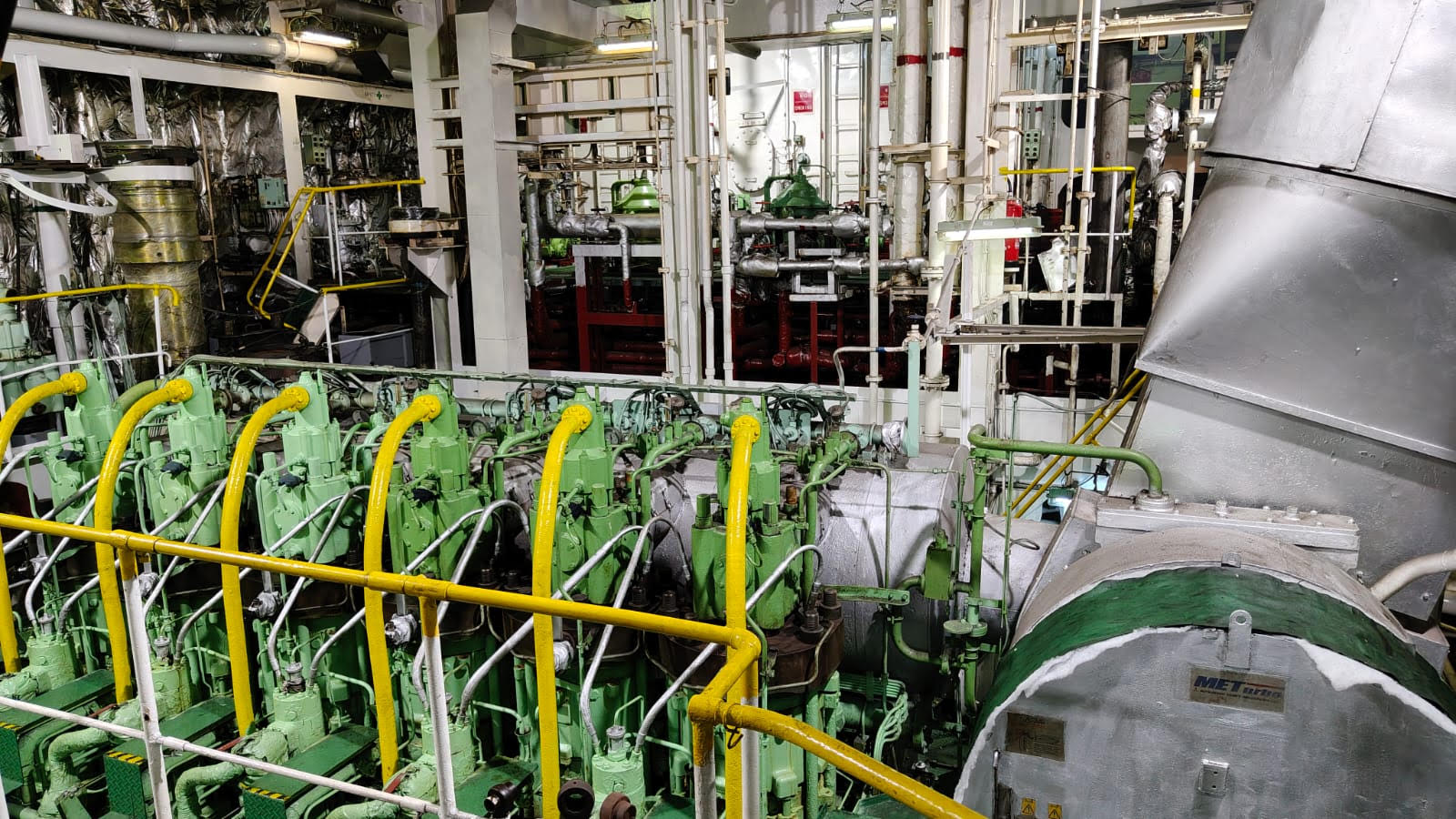
The first worry when attending a vessel for in situ crankshaft grinding of a Yanmar engine is always the real condition of the crankshaft and the limits of the vessel. Repairing a crankshaft onboard is not the same as operating in a fully equipped machine shop. Access onboard is often restricted, vessel schedules are tightly controlled, and we frequently have to return the engine to service without adding unnecessary downtime.
Over the years, we have carried out crankshaft grinding, polishing and related repairs on multiple Yanmar engines at different locations. Our project records include Yanmar engines ranging from the 6 EY18(A)L to the 8N 330 (L)-EV. We have completed this work in Bangladesh, the UAE, Panama, Singapore, Sri Lanka and several other countries, working under different vessel and operating conditions.
Yanmar Crankshaft Grinding Projects
| S.No. | Country / Location | Year | Yanmar Engine Model | Brief Description |
| 1 | Bangladesh, South Asia | 2023 | Yanmar 6 EY18(A)L | Grinding/polishing of crankpin; standard diameter 145 mm |
| 2 | Fujairah, UAE | 2024 | YANMAR 6N18L-EV | Grinding/polishing of crankshaft + metal stitching/crack repair of damaged engine block; crankpin diameter 145 mm |
| 3 | Panama, South America | 2025 | Yanmar 8N 330 (L)-EV | Grinding and polishing of crankpins and main journals; crankpin 260 mm, main journal 280 mm |
| 4 | Singapore | 2025 | YANMAR 6N18(A)L-UV | Grinding and polishing of crankpins + metal stitching/crack repair of damaged engine block; crankpin diameter 145 mm |
| 5 | Bangladesh, South Asia | 2025 | Yanmar 6N18AL-DV | Grinding and polishing of crankpins of AE#02; crankpin diameter 145 mm |
| 6 | Sri Lanka, South Asia | 2025 | YANMAR 6N 18 A-L-UV | Grinding and polishing of crankpins of AE#02; crankpin diameter 145 mm |
What We Check Before Starting the Grinding
Before we mount the grinding equipment, we measure and inspect the crankshaft to establish its actual condition. We first determine how much material we can safely remove while keeping the crankshaft within the applicable OEM dimensions and regrind limits.
At RA Power Solutions, we measure the crankpin or main journal diameter and check it for ovality and taper. We also inspect the journal surface for scoring, wear, seizure marks and other damage. Where necessary, we carefully inspect the fillet area and verify the fillet radius. We treat the fillet radius as a critical crankshaft dimension because an incorrect profile can create a serious stress concentration and affect crankshaft reliability.
We also assess the existing bearing condition. If the journal has already undergone regrinding, we first establish its current undersize before selecting the next grinding dimension. We then refer to the applicable OEM regrind limits and identify the corresponding undersize bearing shells required for the finished crankshaft dimension.
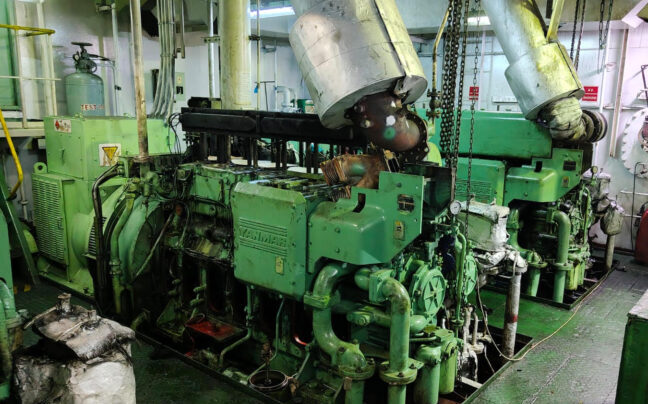
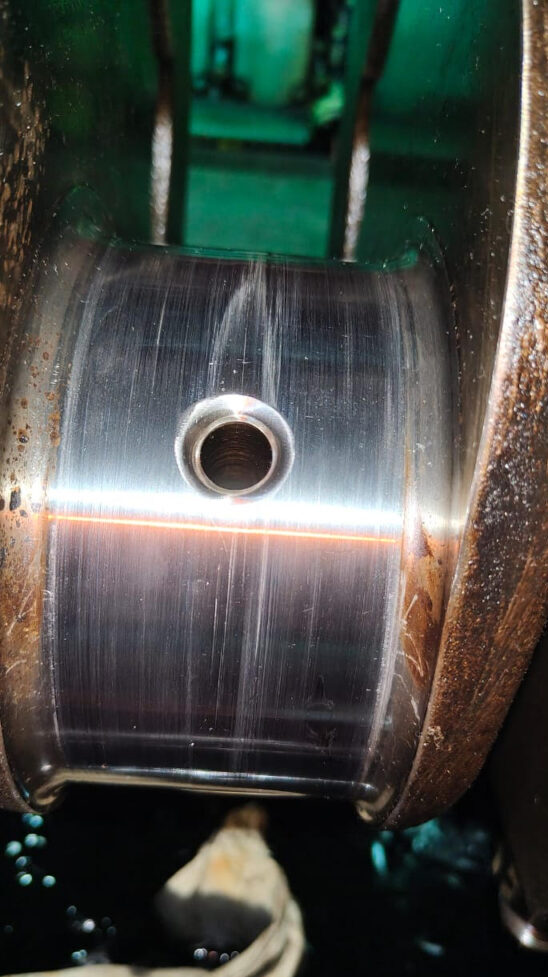
Grinding a Yanmar Crankshaft Onboard
With an in-situ repair, the grinding machine is installed directly around the crankshaft journal. We work with the crankshaft in the engine rather than removing the complete crankshaft and sending it to an outside machine shop.
The grinding operation has to be controlled carefully. We monitor the journal diameter during the operation and work toward the required final dimension rather than simply removing a predetermined amount of material.
Once grinding is completed, the journal is polished to achieve the required surface condition. Ra surface finish is important because the crankpin operates with a bearing surface under hydrodynamic lubrication. The finished journal must provide the appropriate surface condition for reliable operation with the bearing shell.
Main Journals, Crankpins and Engine Block Repairs
Our Yanmar work has not been limited to crankpins. The Yanmar 8N 330 (L)-EV project in Panama included both crankpins and main journals. The recorded standard dimensions were 260 mm for the crankpin and 280 mm for the main journal.
On the Yanmar 6N18L-EV in Fujairah and Yanmar 6N18(A)L-UV in Singapore, we repaired damaged engine blocks using metal stitching and crack repair alongside crankshaft grinding and polishing.
From an engineer’s perspective, we treat these repairs as connected operations because the crankshaft works as part of the complete engine structure. After repairing the block, we check the alignment and condition of the bearing locations before returning the engine to service.
In-Situ Repair and Vessel Downtime
The reason owners and ship managers consider in situ crankshaft grinding is usually straightforward: removing a complete crankshaft can involve substantial preparation, lifting arrangements, workshop transportation and additional vessel downtime.
We determine the repair approach based on the engine arrangement and the damage we find. When the crankshaft remains within the permissible repair dimensions, we can often grind it onboard and avoid removing the complete crankshaft from the engine.
In my experience, we have to plan every repair around the vessel’s operational condition and available maintenance window. A vessel alongside presents different access and scheduling constraints than a vessel in drydock. An emergency repair during a port stay also requires a different approach from planned maintenance.
We do not treat the job as simply grinding a journal. We first complete the necessary measurements, establish the permissible final repair dimension, carry out the grinding and polishing, and then verify that the finished crankshaft dimensions match the bearing arrangement and required running clearance.
OEM Dimensions and Classification Requirements
For marine engines, we work from the applicable OEM dimensions and tolerances rather than relying on a general crankshaft grinding practice.
Where classification requirements apply, the repair documentation and measurements may also need to support the requirements of the relevant classification society, such as DNV, ABS or Lloyd’s Register. The exact requirements depend on the vessel, engine and repair circumstances.
This is particularly important when a crankshaft has already been ground previously. The standard diameter may no longer represent the actual working dimension of the crankshaft. We therefore establish the measured condition first and then determine what grinding is permissible.
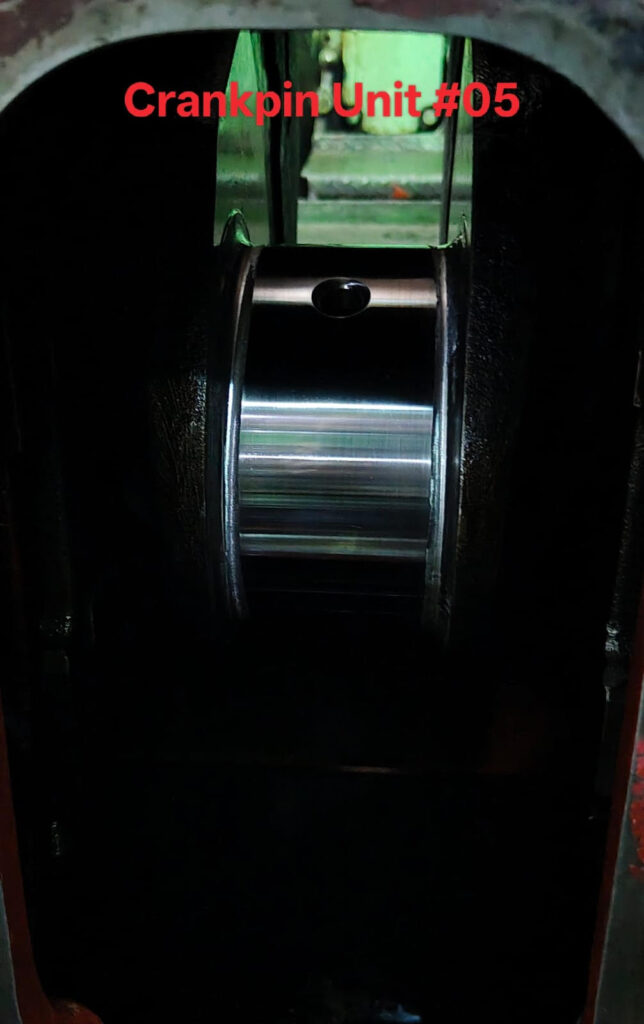
Our Yanmar Engine Repair Experience
The Yanmar projects in our records show that the work has covered different engine models and different repair conditions:
- Yanmar 6 EY18(A)L – Bangladesh, 2023
- YANMAR 6N18L-EV – Fujairah, UAE, 2024
- Yanmar 8N 330 (L)-EV – Panama, 2025
- YANMAR 6N18(A)L-UV – Singapore, 2025
- Yanmar 6N18AL-DV – Bangladesh, 2025
- YANMAR 6N 18 A-L-UV – Sri Lanka, 2025
The recorded jobs include crankpin grinding and polishing, crankshaft grinding, main journal work, and metal stitching/crack repair of damaged engine blocks.
When a crankshaft has been ground and polished, the original standard-size bearing may no longer be suitable. In such cases, the required bearing size has to correspond with the final as-reground crankpin or main journal diameter. We supply undersize crankpin bearings and tri-metal bearing shells for engines where the crankshaft has been reground within the applicable OEM limits.
Dubai remains our top priority market for crankpin bearing exports, given the high volume of vessel traffic through Jebel Ali and the Strait of Hormuz, where delays in bearing supply can directly affect sailing schedules.
Beyond the UAE, we regularly supply crankpin and tri-metal bearings worldwide, including Iraq, Iran, Italy, Oman, Saudi Arabia, Singapore, Russia, Qatar, Abu Dhabi, Sharjah, Ajman, Umm Al-Quwain, Fujairah, Bahrain, Gambia, Kuwait, and across the Caribbean, Southeast Asia, and Africa.
Our reach also extends to Canada, Australia, the UK, the US, Europe, and other major shipping and flag-registry hubs across Asia, the Pacific, and Latin America.
Wherever the vessel is registered or operating, we ensure OEM-spec bearings, complete certification, and export documentation are ready so customs clearance never holds up the sailing schedule.
For us, every Yanmar crankshaft repair starts with the measurements actually found on the engine. The final grinding dimension, surface finish and bearing arrangement have to work together. That is the practical side of in situ crankshaft grinding of Yanmar engines that matters when the vessel is waiting to return to service.